
Top-rated independent heating and cooling across Tampa Bay and Florida's Gulf Coast
Heat Pump Repairs That Make Sense to Do
Your heat pump is down, and somebody has to tell you whether to fix it or start over. We repair heat pumps across Florida and Georgia, and most of the time a repair is the right call. Book a diagnostic and we will tell you what failed, what it takes to put it right, and whether the rest of the system has the life to justify the work.
Call (888) 365-6280- A real person answers
- Open 7 days
- Written quote before work starts
Taking calls until 5:00 PM ET
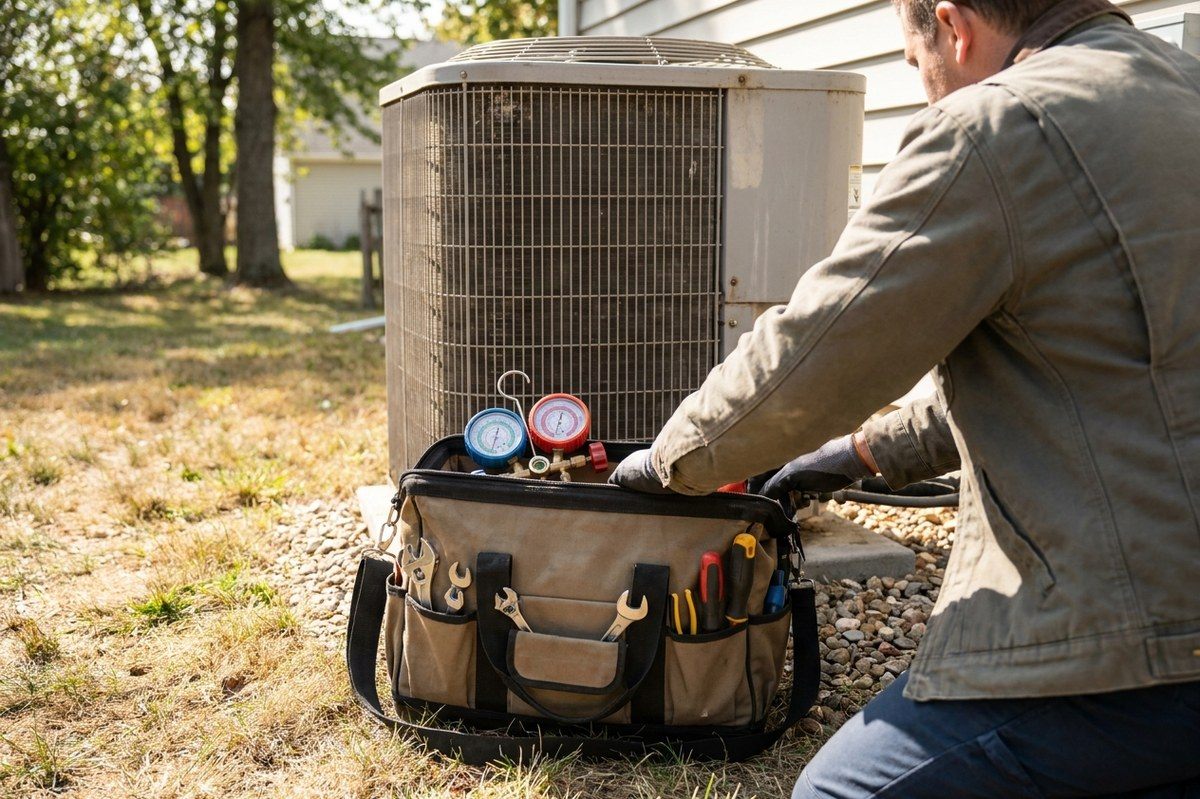
From the technicians at Pinellas Air & Heat
Age Matters, But Not On Its Own
Age is the first thing we look at and the last thing we decide on. A heat pump in its early years with a bad capacitor or a failed contactor is an easy repair and nobody should be talking replacement. Once a system is well into its second decade near the coast, salt air has usually been chewing on the outdoor coil and the cabinet, and we start weighing the repair against what else is likely to fail next season. What we will not do is quote you a new system because of the date on the data plate. We look at the condition of the coils, the compressor amps, and how the refrigerant circuit has been running.
The Fault Type Tells You More Than The Age
Some failures are wear items and some are the heart of the machine. Capacitors, contactors, blower motors, defrost boards, reversing valve solenoids, thermostats and float switches are all normal repairs and they make sense on almost any system that is otherwise sound. A leaking evaporator coil or a failed compressor is a different conversation, because those are the expensive parts and they often show up alongside other tired components. A refrigerant leak is worth finding rather than topping off, because a system that loses charge once will lose it again. We locate the leak before we recommend anything.
Parts Availability And Matching
A repair only makes sense if the part exists and it fits what you already have. Older heat pumps sometimes use components that are no longer produced, and a substitute is not always available. Refrigerant type matters too. If your system uses an older refrigerant that is being phased down, a large repair on the refrigerant circuit becomes harder to justify. Matching counts as well. Putting a new outdoor unit against an aging indoor coil rarely performs the way either piece was designed to, so if we are replacing one side we will tell you honestly what that does to the other.
How We Think About It On The Visit
We diagnose first and talk second. That means checking the thermostat call, the electrical side, static pressure across the air handler, coil condition, refrigerant pressures and temperature split, and the condition of the drain and the duct connections. Then we tell you what failed and why. If it is one part and the rest of the system reads healthy, we fix it. If we find a major failure sitting on top of corroded coils, a struggling compressor and a duct system that never moved enough air, we say that plainly and lay out both paths. You get the findings, not a sales script.
Honest Cases Where Replacement Wins
There are situations where we will tell you to stop spending. A failed compressor on a system already past its useful years is one. A leaking evaporator coil on an older unit using a phased-down refrigerant is another. Repeat repairs in consecutive seasons on different components usually mean the system is at the end of its road. And if the heat pump has never held humidity down in your home, throwing parts at it will not change that, because the problem is sizing or airflow. In those cases we would rather help you plan a replacement than sell you a repair we do not believe in.
Heat Pump Repairs That Make Sense to Do — straight answers
Is it worth repairing a heat pump that is losing refrigerant?
It depends on where the leak is. A leak at a fitting or a service valve is usually a straightforward repair. A leak inside an aging evaporator or condenser coil is a bigger job, and we will show you what we found before you decide.
My heat pump still cools but the house feels damp. Is that a repair?
Often yes. Damp air with adequate cooling usually points to airflow, a dirty coil, a short-cycling control problem or oversizing. We measure airflow and run times before recommending anything, because humidity issues are rarely fixed by adding refrigerant.
How many repairs is too many before I replace?
There is no fixed number, but repeated failures of different major components in back to back seasons is the signal. One wear item every few years is normal. Three unrelated failures in two years usually means the system is finished.
How it works
- Step 1
Tell us the symptom
Call or fill out the quote form and describe what changed. Warm air, short cycling, a clicking outdoor unit, water on the floor. Details help us load the right parts before we drive out.
- Step 2
We diagnose on site
A technician checks the thermostat, airflow, electrical side, refrigerant behavior, and the coil. Coils foul fast in coastal air, so we look there early. You get the finding in plain language before work starts.
- Step 3
Repair and verify
We make the repair, then run the system and watch it. Supply temperature, drain flow, amp draw, and how the house actually feels. If the fix needs a follow-up part, we tell you that day.
- A real person answers
- Open 7 days
- Written quote before work starts
Why homeowners call us
- Humidity gets equal weightCold air alone is not comfort. On slab homes and older condos, a system can hit temperature and still leave the rooms clammy. We look at run time, airflow, and drainage so the house dries out instead of just chilling.
- Coastal wear is expectedSalt air chews condenser fins and contactors. We check for corrosion, weak capacitors, and fouled coils as part of the diagnosis, because in this region those are causes rather than afterthoughts.
- Heat gets attention tooFurnace repair, heat pump reversing valve trouble, and heat strip failures all come through in the cooler months. Georgia homes lean on heat harder than Florida homes, and we service both ends of the region.
- No mystery invoicesYou hear what failed, what it takes to fix, and what we found nearby that may fail next. If a repair does not make sense on an old system, we say so instead of stacking parts on it.
- All major brands, gas & electricCarrier, Trane, Lennox, Goodman, Rheem, York and more, as an independent company.
- Straight answersIf a system is not worth repairing, we say so, often right on the phone.
About this guide
When the easy checks change nothing, it's time for a tech
Bring your notes from the checks to the call and booking takes no time.
- A real person answers
- Open 7 days
- Written quotes
- All major brands
- Gas & electric
Rather not call? Get a free quote →