
Top-rated independent heating and cooling across Tampa Bay and Florida's Gulf Coast
No Heat at All
You woke up cold. The thermostat says heat, the house says otherwise, and nothing is coming out of the vents but room-temperature air. We handle no-heat calls on homes across Florida and Georgia, and most of them trace back to one of four things. Here is how we work through them in order, cheapest first, and what you can safely check before we arrive.
Call (888) 365-6280- A real person answers
- Open 7 days
- Written quote before work starts
Taking calls until 5:00 PM ET
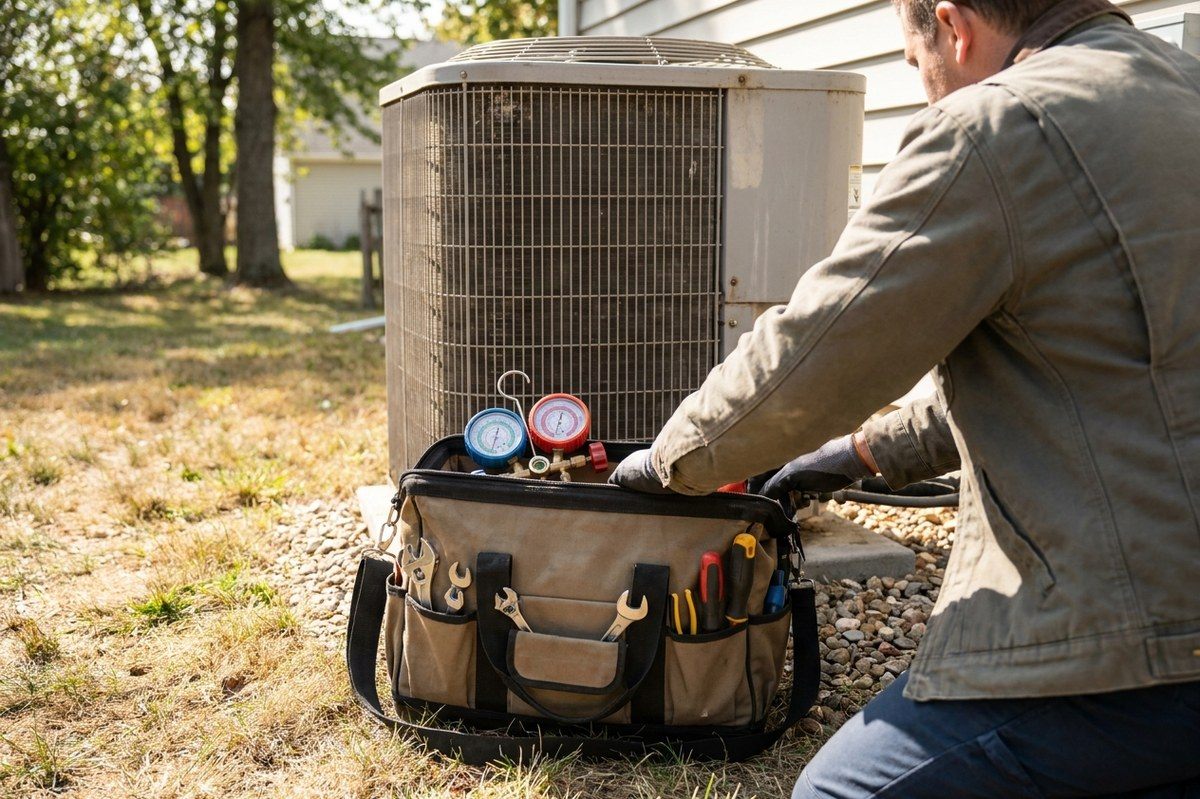
From the technicians at Pinellas Air & Heat
What "no heat at all" usually means
No heat at all splits into two very different problems. Either the system is not starting, meaning no blower, no hum, nothing, or the system runs but only pushes cool air. That difference tells us where to look. A dead system points at power, controls, or a safety device that has locked things out. Air moving without warmth points at the heating stage itself, whether that is a gas burner not lighting, a heat pump stuck on the fan, or electric heat strips that are not energizing. Note which one you have. It saves time on the phone and on the call.
Cause family one: thermostat and power
This is the cheapest family and it is more common than people expect. Dead thermostat batteries, a schedule that was never set for heating season, a mode left on cool, or a tripped breaker will all produce a house that stays cold. On heat pumps, emergency heat left off while the outdoor unit is down can look like total failure. Service switches near the indoor unit get bumped during storage or cleaning, and a full float switch from a clogged condensate line will cut the system off entirely. These are quick to confirm and quick to correct, which is why we start here.
Cause family two: airflow and safety lockouts
A filter that has not been changed in months chokes airflow, and heating equipment protects itself by shutting down on high temperature limit. Closed or blocked vents, crushed flex duct, and a dirty blower wheel do the same thing. Near the Gulf, coils and blowers foul faster than most people plan for, and that restriction shows up as a system that runs briefly then quits, over and over. Lockouts are the equipment doing its job. Clearing the restriction is the actual repair, and if the limit switch itself has failed from repeated cycling, we replace it.
Cause family three: ignition, heat strips, and the outdoor unit
Now we are into parts that need tools and testing. On gas equipment, that means an igniter, flame sensor, gas valve, pressure switch, or inducer motor. On electric heat, it is sequencers, contactors, or a burned heat strip. On heat pumps, a failed reversing valve, defrost board, or low refrigerant charge leaves you with a fan and no warmth. None of this is homeowner territory, and we will not walk you through it. Gas and high voltage both hurt people. This is the point where you call for heating repair and let a technician meter it out.
What is safe for you to check, and what we do differently
Safe checks: thermostat batteries and settings, the breaker panel, a fresh filter, debris cleared from around the outdoor unit, and vents open in every room. That is the list. If you ever smell gas or your carbon monoxide alarm sounds, leave the building first, call 911 or your gas utility from outside, then call us. When we arrive for furnace repair or heater repair we meter voltage at the board, read control signals, check gas pressure and temperature rise, inspect the heat exchanger, and test refrigerant charge on heat pumps. We measure instead of guessing.
No Heat at All — straight answers
Why is my heat pump blowing cool air when the heat is on?
Usually a failed reversing valve, a defrost control problem, or low refrigerant charge, so the blower runs without the heating stage. Sometimes the system is simply in a normal defrost cycle. If it lasts more than fifteen minutes, call us.
Should I use emergency heat until you get here?
Yes, if your thermostat has it and the house is genuinely cold. Emergency heat runs the electric strips directly and will warm the home. It uses more energy, so switch it back off once the repair is done.
Can a dirty filter really stop the heat completely?
It can. Restricted airflow makes heating equipment overheat and shut off on a safety limit, sometimes locking out entirely after repeated tries. Put in a clean filter, reset the breaker once, and see if it stays running.
How it works
- Step 1
Tell us the symptom
Call or fill out the quote form and describe what changed. Warm air, short cycling, a clicking outdoor unit, water on the floor. Details help us load the right parts before we drive out.
- Step 2
We diagnose on site
A technician checks the thermostat, airflow, electrical side, refrigerant behavior, and the coil. Coils foul fast in coastal air, so we look there early. You get the finding in plain language before work starts.
- Step 3
Repair and verify
We make the repair, then run the system and watch it. Supply temperature, drain flow, amp draw, and how the house actually feels. If the fix needs a follow-up part, we tell you that day.
- A real person answers
- Open 7 days
- Written quote before work starts
Why homeowners call us
- Humidity gets equal weightCold air alone is not comfort. On slab homes and older condos, a system can hit temperature and still leave the rooms clammy. We look at run time, airflow, and drainage so the house dries out instead of just chilling.
- Coastal wear is expectedSalt air chews condenser fins and contactors. We check for corrosion, weak capacitors, and fouled coils as part of the diagnosis, because in this region those are causes rather than afterthoughts.
- Heat gets attention tooFurnace repair, heat pump reversing valve trouble, and heat strip failures all come through in the cooler months. Georgia homes lean on heat harder than Florida homes, and we service both ends of the region.
- No mystery invoicesYou hear what failed, what it takes to fix, and what we found nearby that may fail next. If a repair does not make sense on an old system, we say so instead of stacking parts on it.
- All major brands, gas & electricCarrier, Trane, Lennox, Goodman, Rheem, York and more, as an independent company.
- Straight answersIf a system is not worth repairing, we say so, often right on the phone.
About this guide
Past the safe checks, it's a job for tools and a meter
Mention which checks you ran when you book; it speeds up the visit.
- A real person answers
- Open 7 days
- Written quotes
- All major brands
- Gas & electric
Rather not call? Get a free quote →