
Top-rated independent heating and cooling across Tampa Bay and Florida's Gulf Coast
Buzzing, Rattling, or Screeching From the Outdoor Unit
Your outdoor unit started making a noise it never used to make. Maybe a low buzz that stops when the fan kicks on, maybe a rattle like a bolt loose in a coffee can, maybe a screech that makes you look out the window. We diagnose and repair noisy outdoor units across Florida and Georgia, and here is what those sounds usually mean before you call.
Call (888) 365-6280- A real person answers
- Open 7 days
- Written quote before work starts
Taking calls until 5:00 PM ET
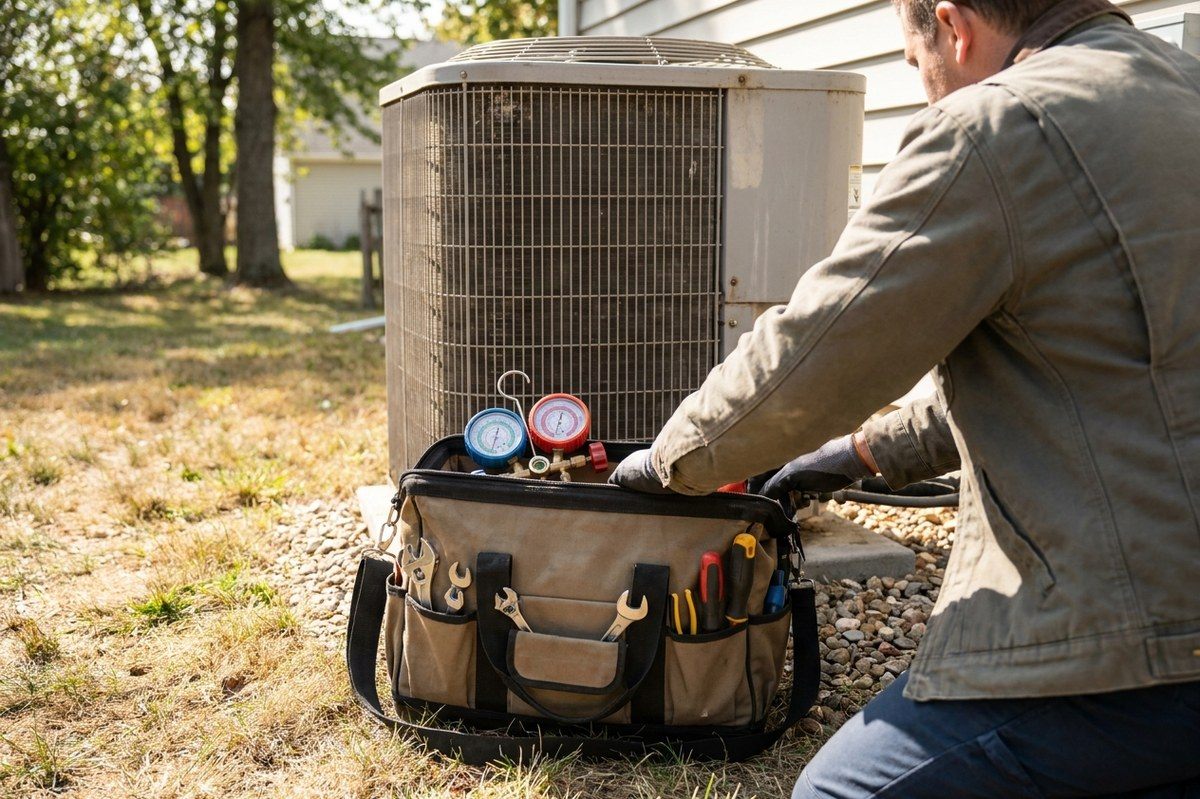
From the technicians at Pinellas Air & Heat
What the Noise Is Actually Telling You
The outdoor unit has three things that can make noise: a fan motor, a compressor, and the sheet metal cabinet holding them together. Match the sound to the part and you narrow it fast. A rattle that changes with fan speed is usually loose hardware or debris. A steady electrical buzz points at a contactor or capacitor. A screech or metal-on-metal grind points at a bearing in a motor. A hard bang at startup usually means the compressor is straining. None of those fix themselves, and a cheap noise left alone often becomes a compressor replacement by August.
Cause Family One: Loose Panels and Debris
This is the cheapest outcome and it is common near the Gulf, where salt air works on screws and wind piles yard waste against the coil. Cabinet screws back out over a few seasons and the top panel drums against the frame. Palm fronds, oak leaves and mulch get pulled into the fan guard and slap the blade. Sometimes it is a lawn sprinkler head spraying the cabinet. If the noise showed up right after a storm or a mow, this is the first thing we look at. Tightening hardware and clearing the coil is often the whole repair, and it also brings the unit back to normal running temperature.
Cause Family Two: Electrical Buzz at the Contactor or Capacitor
A buzz you hear standing next to the unit, especially with the outdoor fan not turning, is usually the contactor chattering or a failing run capacitor. The contactor is the relay that lets high voltage into the compressor and fan. When its contacts pit, it hums and holds only part of the time, and the compressor tries to start over and over. A weak capacitor does something similar and often shows up as a hum with no fan movement. This is high-voltage work with stored charge inside the cabinet, so it is not a homeowner job. Shut the system off at the thermostat and call for air conditioning repair.
Cause Family Three: Fan Motor and Compressor Wear
Screeching, grinding or a rhythmic rubbing sound usually means bearings in the condenser fan motor are done. You may also see the fan spinning slower than it used to, or the unit tripping off on a hot afternoon because it cannot reject heat. A deeper metallic knock or a growl from low in the cabinet points at the compressor, often with a failing start component or refrigerant pressures out of range behind it. Compressor noise is the one worth acting on the same day. Running a unit that is knocking rarely saves anything, and shutting it down protects the part that costs the most to replace.
What You Can Safely Check, and What We Do Differently
Safe for you: set the thermostat to off, change the filter, look for a tripped breaker, clear leaves and clippings back about two feet around the outdoor unit, and make sure indoor vents are open and not blocked by furniture. Do not open the electrical panel on the unit and do not pull the fan guard. When we arrive we take amp draw on the fan and compressor, test capacitor capacitance against rating, check contactor contacts, read refrigerant pressures and coil temperatures, and check blower and drain condition inside, because a noisy outdoor unit and poor humidity control often share the same cause. Then we tell you what part failed and why.
Buzzing, Rattling, or Screeching From the Outdoor Unit — straight answers
Can I keep running my AC if the outdoor unit is buzzing?
For a short buzz with normal cooling, yes, briefly. If the fan is not spinning, the noise is a grind or knock, or the house is not cooling, shut it off at the thermostat and schedule air conditioner repair before more parts fail.
Why is my unit louder in summer than in winter?
Higher outdoor temperatures raise system pressures, so the compressor works harder and marginal parts get noisy. Heat also softens grease in worn bearings. A noise that only shows up on hot afternoons still means something is wearing out.
Does hosing off the outdoor coil quiet it down?
Sometimes, if the noise came from restricted airflow and a straining fan. Coils foul fast near salt air. Use gentle water pressure with the power off at the disconnect, or have us clean it properly during a service visit.
How it works
- Step 1
Tell us the symptom
Call or fill out the quote form and describe what changed. Warm air, short cycling, a clicking outdoor unit, water on the floor. Details help us load the right parts before we drive out.
- Step 2
We diagnose on site
A technician checks the thermostat, airflow, electrical side, refrigerant behavior, and the coil. Coils foul fast in coastal air, so we look there early. You get the finding in plain language before work starts.
- Step 3
Repair and verify
We make the repair, then run the system and watch it. Supply temperature, drain flow, amp draw, and how the house actually feels. If the fix needs a follow-up part, we tell you that day.
- A real person answers
- Open 7 days
- Written quote before work starts
Why homeowners call us
- Humidity gets equal weightCold air alone is not comfort. On slab homes and older condos, a system can hit temperature and still leave the rooms clammy. We look at run time, airflow, and drainage so the house dries out instead of just chilling.
- Coastal wear is expectedSalt air chews condenser fins and contactors. We check for corrosion, weak capacitors, and fouled coils as part of the diagnosis, because in this region those are causes rather than afterthoughts.
- Heat gets attention tooFurnace repair, heat pump reversing valve trouble, and heat strip failures all come through in the cooler months. Georgia homes lean on heat harder than Florida homes, and we service both ends of the region.
- No mystery invoicesYou hear what failed, what it takes to fix, and what we found nearby that may fail next. If a repair does not make sense on an old system, we say so instead of stacking parts on it.
- All major brands, gas & electricCarrier, Trane, Lennox, Goodman, Rheem, York and more, as an independent company.
- Straight answersIf a system is not worth repairing, we say so, often right on the phone.
About this guide
When the easy checks change nothing, it's time for a tech
Tell us what you tried and what it did. The booking itself takes a minute.
- A real person answers
- Open 7 days
- Written quotes
- All major brands
- Gas & electric
Rather not call? Get a free quote →