
Top-rated independent heating and cooling across Tampa Bay and Florida's Gulf Coast
The House Feels Clammy Even With the AC Running
Your thermostat says 74 and the AC is running, but the air still feels sticky. Towels stay damp, the floors feel tacky, and there is a musty smell near the vents. That is a humidity problem, not a temperature problem, and it usually comes down to how long your system runs and how well it moves air. Here is what we look at.
Call (888) 365-6280- A real person answers
- Open 7 days
- Written quote before work starts
Taking calls until 5:00 PM ET
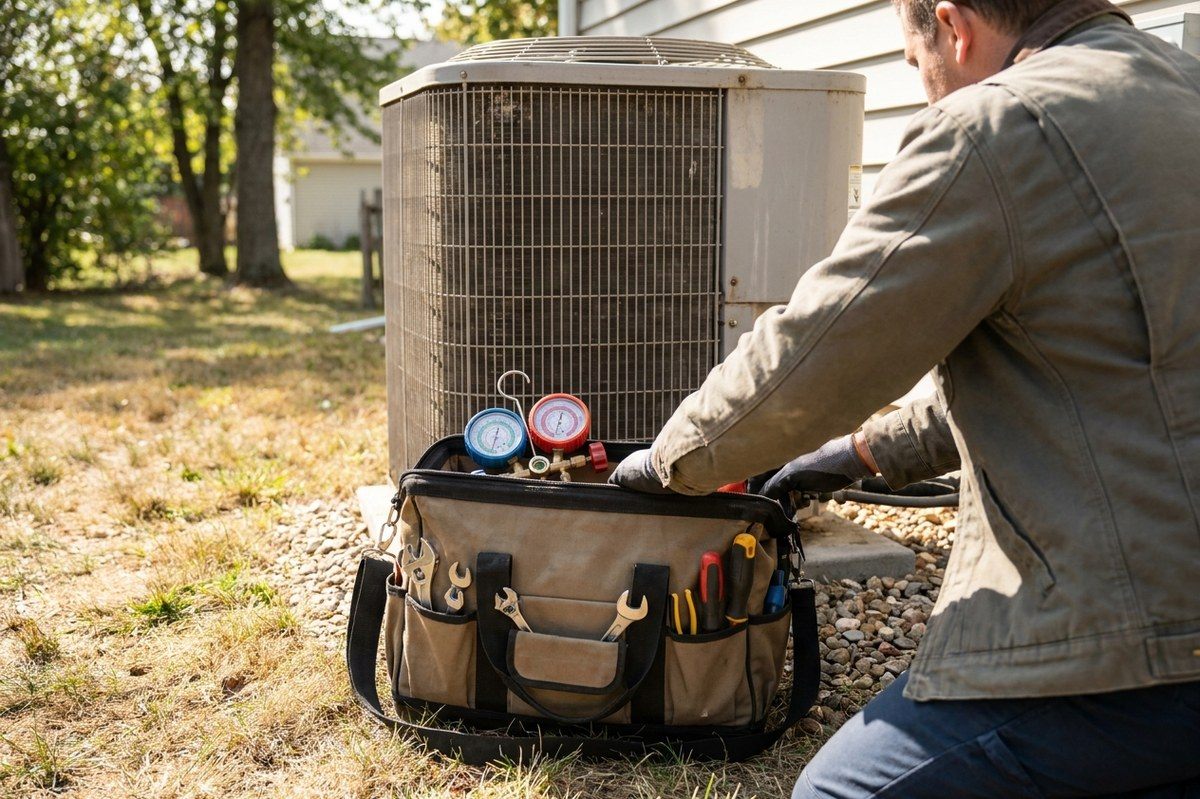
From the technicians at Pinellas Air & Heat
What Clammy Air Actually Tells You
Clammy air at a normal temperature means your system is cooling faster than it is dehumidifying. An air conditioner pulls moisture out of the air only while the indoor coil is cold and air is passing over it. Short cycles cool the room quickly, satisfy the thermostat, then shut off before much water has drained out of the pan. In humid coastal and southern climates across Florida and Georgia, that leaves indoor humidity sitting in the 60 percent range or higher. You feel that as sticky, heavy air. Window condensation, doors swelling in their frames and mildew on baseboards are all the same story told a different way.
Cause Family One: Airflow and Filters
The cheapest thing to rule out is restricted airflow. A loaded filter, closed supply vents or furniture parked over a return starves the blower. When air slows down too much, the coil can get too cold, ice over in patches and stop draining properly, so moisture that should leave the house through the condensate line drips back into the airstream instead. Crushed or disconnected flex duct in an attic does the same thing. Start with a clean filter in the right size and orientation, open every supply register, and pull the rug or box off the return grille. If the sticky feeling eases within a day, airflow was your issue.
Cause Family Two: An Oversized or Short-Cycling System
A system with more cooling capacity than the house needs will drop the temperature fast and shut off, which is exactly the wrong pattern for humidity. We see this often after a replacement where someone rounded the BTU capacity up to be safe. Long, steady runs remove far more water than quick blasts. Thermostat settings matter here too. Fan set to ON instead of AUTO keeps the blower spinning after the compressor stops, and that re-evaporates water sitting on the coil and pushes it right back into your rooms. Switch the fan to AUTO first. If the house still runs damp with clean airflow and a correct thermostat setup, capacity and staging need a real look.
Cause Family Three: Leaks, Refrigerant and Drainage
Outside air is the third culprit. Leaky return ducts in a hot attic, a crawlspace hatch left open, a bathroom fan venting into the attic or a dryer of humid air from an unsealed slab all add moisture faster than the AC can remove it. Low refrigerant charge is another cause, and it needs a technician. A weak charge means a coil that does not get cold enough to condense water, and the only proper fix is finding and repairing the leak. Same with a slow or clogged condensate drain. When water backs up in the pan, it evaporates back into the house. Do not open refrigerant lines yourself.
What a Technician Does Differently
We measure instead of guessing. On a humidity call we log indoor temperature and relative humidity at several spots, check the temperature split across the indoor coil, read static pressure to see whether the blower is fighting the duct system, and inspect the coil and blower wheel. Near the Gulf and anywhere with salt air, coils foul fast and a dirty coil looks exactly like a charge problem until you clean it. We check refrigerant pressures, verify the condensate path drains fully, and look for return leaks that pull attic air. Then we talk about run time, staging, thermostat programming and whether a dedicated dehumidifier makes sense. Call us for air conditioning repair and we will bring the gauges.
When it is time to book
The House Feels Clammy Even With the AC Running — straight answers
Should I turn the temperature down to dry the house out?
Usually not. Setting it lower makes the system run longer, which helps some, but it also makes the house cold and clammy instead of warm and clammy. Fix airflow and run time first, then reassess.
Is a whole-house dehumidifier worth it in a humid climate?
Often yes, especially in tight or oversized homes where the AC satisfies the thermostat before it removes enough water. We would rather correct airflow and charge first, then size a dehumidifier to what is left.
Why does my house smell musty when the AC comes on?
That smell usually comes from a wet indoor coil, a blocked condensate drain, or biological growth in the drain pan or duct liner. It is worth an inspection because standing water tends to get worse, not better.
How it works
- Step 1
Tell us the symptom
Call or fill out the quote form and describe what changed. Warm air, short cycling, a clicking outdoor unit, water on the floor. Details help us load the right parts before we drive out.
- Step 2
We diagnose on site
A technician checks the thermostat, airflow, electrical side, refrigerant behavior, and the coil. Coils foul fast in coastal air, so we look there early. You get the finding in plain language before work starts.
- Step 3
Repair and verify
We make the repair, then run the system and watch it. Supply temperature, drain flow, amp draw, and how the house actually feels. If the fix needs a follow-up part, we tell you that day.
- A real person answers
- Open 7 days
- Written quote before work starts
Why homeowners call us
- Humidity gets equal weightCold air alone is not comfort. On slab homes and older condos, a system can hit temperature and still leave the rooms clammy. We look at run time, airflow, and drainage so the house dries out instead of just chilling.
- Coastal wear is expectedSalt air chews condenser fins and contactors. We check for corrosion, weak capacitors, and fouled coils as part of the diagnosis, because in this region those are causes rather than afterthoughts.
- Heat gets attention tooFurnace repair, heat pump reversing valve trouble, and heat strip failures all come through in the cooler months. Georgia homes lean on heat harder than Florida homes, and we service both ends of the region.
- No mystery invoicesYou hear what failed, what it takes to fix, and what we found nearby that may fail next. If a repair does not make sense on an old system, we say so instead of stacking parts on it.
- All major brands, gas & electricCarrier, Trane, Lennox, Goodman, Rheem, York and more, as an independent company.
- Straight answersIf a system is not worth repairing, we say so, often right on the phone.
About this guide
When the easy checks change nothing, it's time for a tech
Bring your notes from the checks to the call and booking takes no time.
- A real person answers
- Open 7 days
- Written quotes
- All major brands
- Gas & electric
Rather not call? Get a free quote →