
Top-rated independent heating and cooling across Tampa Bay and Florida's Gulf Coast
Keeping the Condensate Drain Clear
Your air conditioner pulls gallons of water out of the air every day, and all of it leaves through one narrow PVC pipe. When that pipe clogs, the water backs up into the pan, then onto the ceiling, the closet floor, or the carpet. Most of the water damage we see in homes across Florida and Georgia started with a clog someone could have prevented in five minutes.
Call (888) 365-6280- A real person answers
- Open 7 days
- Written quote before work starts
Taking calls until 5:00 PM ET
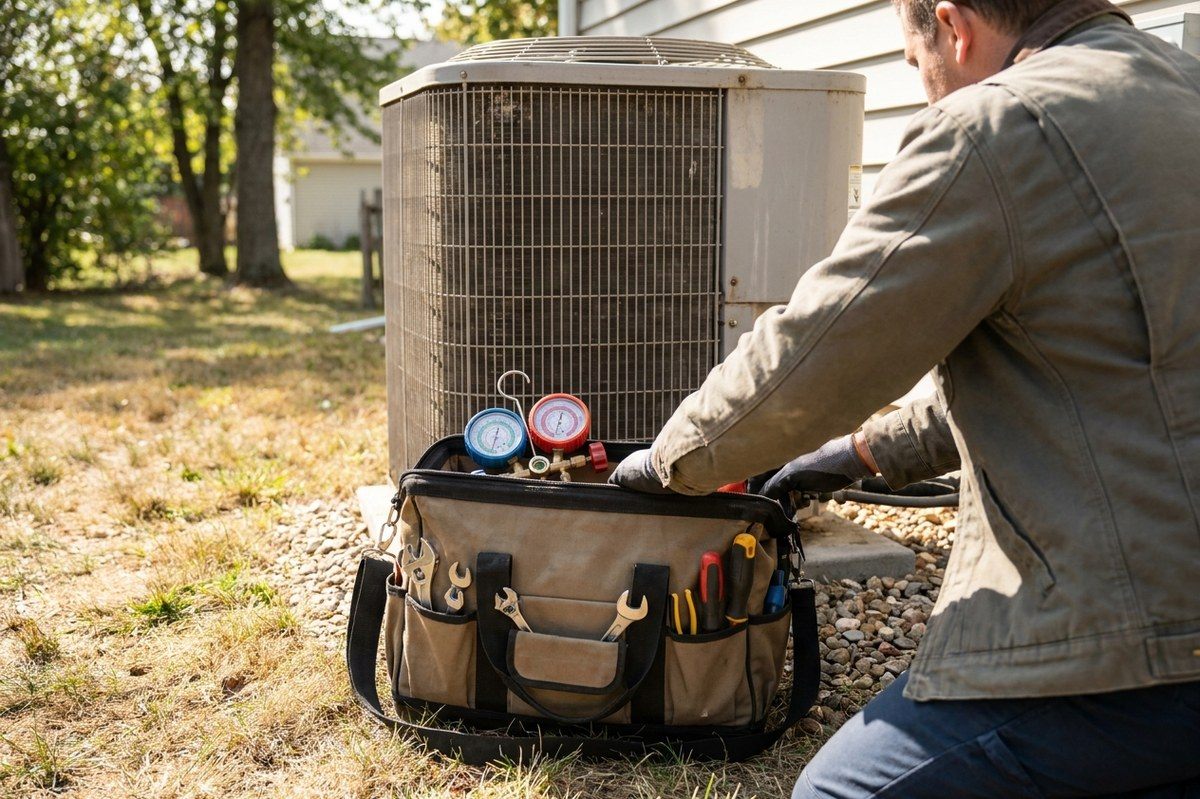
From the technicians at Pinellas Air & Heat
What Neglect Actually Does Over Time
A condensate line does not clog overnight. Dust, pollen and the slime that grows in a dark wet pipe build up a little at a time until the drain slows, then stops. Once water sits in the pan, it finds the lowest exit. In slab homes that often means the air handler closet floor. In upstairs closets and older condo units, it means a stain on the ceiling below. Standing water also rusts the pan and the sheet metal around it, and the damp air feeds mold growth inside the cabinet where nobody looks. Many systems have a float switch that shuts cooling off before the overflow starts, which is why a clog often shows up as no cooling at all.
The Simple Habit That Prevents It
Pour a cup of distilled white vinegar into the access port on the drain line, the capped tee near the air handler. Take the cap off, pour it in slowly, put the cap back. That is the whole job. The vinegar kills the biological growth that forms the plug before it hardens into one. Do not use bleach. It attacks the glue joints and any metal it touches, and it is rough on the pan. While the cap is off, look at the water level in the tee. If it is full to the top and not draining, the line is already restricted and pouring more liquid in will not help. Call us instead.
How Often, and When
Once a month during cooling season is the honest answer for our climate, because in Florida and Georgia the system runs and produces water nearly year round. If that feels like too much, do it at the start of the season and then every six to eight weeks through the hottest stretch. Pair it with the filter change so you only have to remember one task. A dirty filter loads the coil with dust, and that dust washes down into the drain line, so the two jobs feed each other. Homes with pets, recent construction dust or an air handler in a hot attic clog faster and deserve the monthly schedule.
Warning Signs It Is Already Too Late
The system runs the blower but never cools, and the thermostat looks normal. That is often a float switch doing its job. A musty smell near the air handler or coming out of the supply vents means water is sitting somewhere it should not. Water on the closet floor, a soft spot or brown ring on a ceiling, or a rust line down the side of the cabinet all point to an overflow that has been going a while. Outside, if the drain line that normally drips near the wall has been dry on a humid day while the AC ran, the water is going somewhere else. Any of these is a call, not a wait.
What We Do When You Call
We clear the line, find out why it clogged, and check what the water already reached. Clearing usually means pulling the blockage with a vacuum from the outdoor termination and flushing the line back through, then verifying the drain runs freely and the pan is empty. After that we look at the coil, because a fouled coil near the Gulf sheds a steady supply of debris into the drain and will clog the line again in weeks. We test the float switch, check the pan for rust holes, and check the slope of the line, since a sagging run holds water and clogs on repeat. If you need air conditioning repair for a water problem, call us and we will get out to you.
Keeping the Condensate Drain Clear — straight answers
Can I use bleach in my condensate line?
We do not recommend it. Bleach damages glued PVC joints, corrodes the metal drain pan and the coil above it, and its fumes are harsh in a closed closet. Distilled white vinegar does the same job without the damage.
Why does my AC shut off but the thermostat looks fine?
Often a float switch in the drain pan has sensed backed-up water and cut the cooling call to stop an overflow. It is protecting your ceiling. The line needs clearing before the system will run normally again.
My drain line drips outside constantly. Is that normal?
Yes. A working AC pulls a lot of moisture from humid air, and that water has to go somewhere. Steady dripping while the system runs is healthy. A line that stays dry on a humid day is the one to worry about.
How it works
- Step 1
Tell us the symptom
Call or fill out the quote form and describe what changed. Warm air, short cycling, a clicking outdoor unit, water on the floor. Details help us load the right parts before we drive out.
- Step 2
We diagnose on site
A technician checks the thermostat, airflow, electrical side, refrigerant behavior, and the coil. Coils foul fast in coastal air, so we look there early. You get the finding in plain language before work starts.
- Step 3
Repair and verify
We make the repair, then run the system and watch it. Supply temperature, drain flow, amp draw, and how the house actually feels. If the fix needs a follow-up part, we tell you that day.
- A real person answers
- Open 7 days
- Written quote before work starts
Why homeowners call us
- Humidity gets equal weightCold air alone is not comfort. On slab homes and older condos, a system can hit temperature and still leave the rooms clammy. We look at run time, airflow, and drainage so the house dries out instead of just chilling.
- Coastal wear is expectedSalt air chews condenser fins and contactors. We check for corrosion, weak capacitors, and fouled coils as part of the diagnosis, because in this region those are causes rather than afterthoughts.
- Heat gets attention tooFurnace repair, heat pump reversing valve trouble, and heat strip failures all come through in the cooler months. Georgia homes lean on heat harder than Florida homes, and we service both ends of the region.
- No mystery invoicesYou hear what failed, what it takes to fix, and what we found nearby that may fail next. If a repair does not make sense on an old system, we say so instead of stacking parts on it.
- All major brands, gas & electricCarrier, Trane, Lennox, Goodman, Rheem, York and more, as an independent company.
- Straight answersIf a system is not worth repairing, we say so, often right on the phone.
About this guide
Safe checks done and it still misbehaves? That's a real fault
Tell us what you tried and what it did. The booking itself takes a minute.
- A real person answers
- Open 7 days
- Written quotes
- All major brands
- Gas & electric
Rather not call? Get a free quote →