
Top-rated independent heating and cooling across Tampa Bay and Florida's Gulf Coast
Gas Smell Near the Furnace
You walked past the furnace and caught that rotten egg smell. Maybe it is faint, maybe it hits you the second you open the closet door. Either way, stop reading in place and get everyone out of the house first. Gas smell is a life safety issue, not a maintenance question. Once you are outside and safe, here is what to do next.
Call (888) 365-6280- A real person answers
- Open 7 days
- Written quote before work starts
Taking calls until 5:00 PM ET
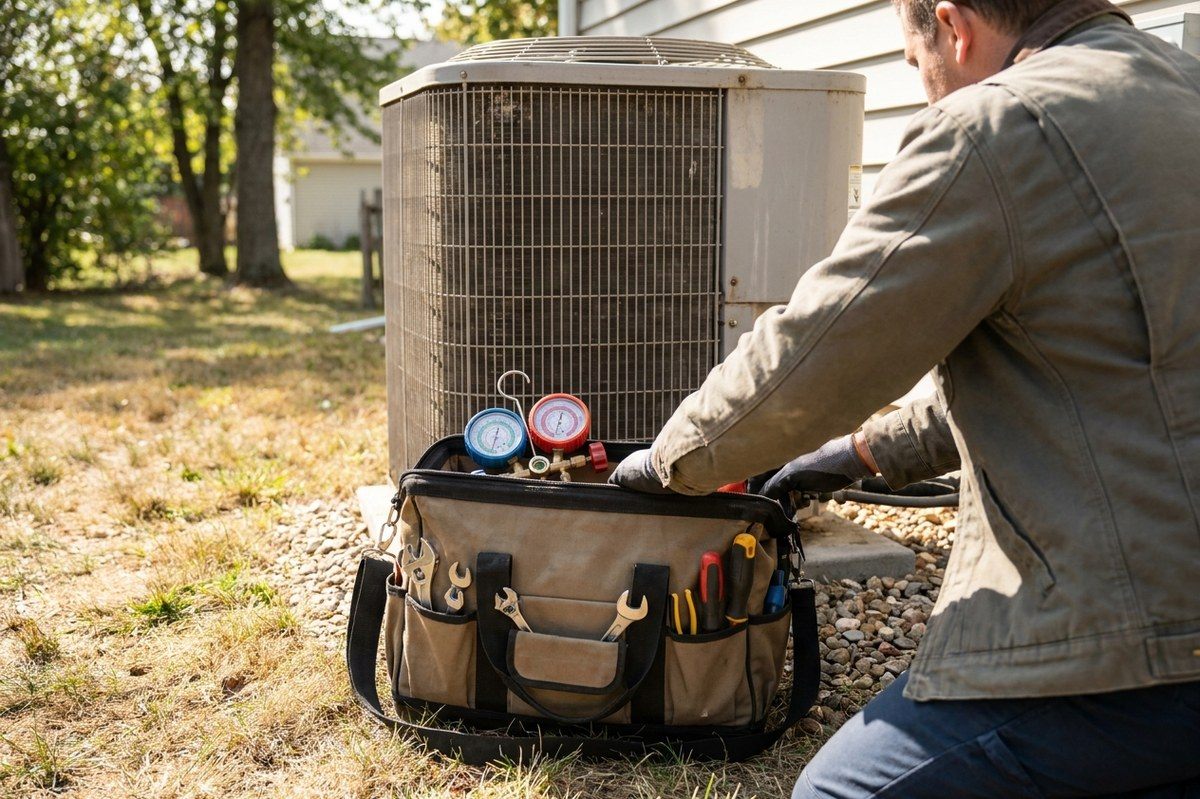
From the technicians at Pinellas Air & Heat
First: Get Out, Then Call 911 or the Gas Utility
Leave the building now. Take everyone with you, including pets, and walk out the door you normally use. Once you are outside and a good distance away, call 911 or your gas utility's emergency line. They come out for this and they do not charge you for the call. Give them your address and tell them you smell gas near the furnace. Stay outside until they tell you the building is safe to enter, even if the smell seems to fade. Gas can pool in low spots and closets where you would not notice it standing in a hallway. After they clear the house, call us and we will look at the heating system itself.
What Not To Do On Your Way Out
Do not flip any light switches, on or off. Do not unplug anything, do not use the garage door opener, and do not stand in the room making a phone call. A spark from a switch or a motor is enough. Leave doors open behind you if that is quick and natural, but do not spend time opening every window. Do not go back in for a charger or a laptop. And do not try to shut off the gas valve at the furnace yourself unless the utility walks you through it on the phone. That valve and the piping around it are their work and ours, not a homeowner task.
If You Smell Nothing But The Detector Is Sounding
A carbon monoxide alarm is a different problem with the same first step. Carbon monoxide has no smell at all, so trust the detector over your nose. Get everyone outside and call 911. Tell the dispatcher your CO alarm is sounding and say whether anyone has a headache, feels dizzy, or is nauseated. Those symptoms move you to the front of the line. Do not reset the alarm and go back to bed. Once responders clear the house, the furnace needs a real look at the heat exchanger, the venting, and the combustion side. Call us and we will inspect the whole path the exhaust takes on its way out.
Faint Smells That Turn Out To Be Something Else
Not every odor near the furnace is a leak, but you do not diagnose that from the hallway. A dusty burning smell on the first cold morning of the season is common as dust burns off a heat exchanger, and it clears in twenty minutes. A sharp chemical smell, a persistent rotten egg smell, or soot around the burner area is different. If you are unsure, treat it as gas and make the call. Across the region we would rather show up to a false alarm than to a house nobody left. Homeowners in Florida and Georgia both call us for this, and the answer is the same either way.
When To Call Us And What Happens Next
Call us after the utility or fire department has cleared the building, or call us the same day if they shut the gas off at the meter. When a utility red tags a furnace, the gas stays off until the problem is repaired, and that is heating repair work. We check the gas valve, the burners, the heat exchanger, the flue and vent connections, and the safety controls that are supposed to shut the system down before it ever gets to a smell. We handle furnace repair and heater repair across Florida and Georgia, along with air conditioning repair when the cooling season comes back around. Tell us what you smelled and when, and whether the gas is currently on or off.
Gas Smell Near the Furnace — straight answers
Should I turn the furnace off before I leave?
No. Do not touch switches, controls, or the gas valve on your way out. Leaving the building is the priority. The gas utility or fire department will shut things down safely when they arrive.
How long do I have to stay outside?
Until the gas utility or fire department says the building is safe to enter. They use meters that read gas levels you cannot smell. Do not go back in on your own judgment, even if the odor is gone.
Can a gas smell come from the AC side of the system?
No. Cooling equipment does not burn gas. If the smell is near a shared indoor cabinet, it is coming from the furnace or gas piping in that space, and the same steps apply. Leave and call.
How it works
- Step 1
Tell us the symptom
Call or fill out the quote form and describe what changed. Warm air, short cycling, a clicking outdoor unit, water on the floor. Details help us load the right parts before we drive out.
- Step 2
We diagnose on site
A technician checks the thermostat, airflow, electrical side, refrigerant behavior, and the coil. Coils foul fast in coastal air, so we look there early. You get the finding in plain language before work starts.
- Step 3
Repair and verify
We make the repair, then run the system and watch it. Supply temperature, drain flow, amp draw, and how the house actually feels. If the fix needs a follow-up part, we tell you that day.
- A real person answers
- Open 7 days
- Written quote before work starts
Why homeowners call us
- Humidity gets equal weightCold air alone is not comfort. On slab homes and older condos, a system can hit temperature and still leave the rooms clammy. We look at run time, airflow, and drainage so the house dries out instead of just chilling.
- Coastal wear is expectedSalt air chews condenser fins and contactors. We check for corrosion, weak capacitors, and fouled coils as part of the diagnosis, because in this region those are causes rather than afterthoughts.
- Heat gets attention tooFurnace repair, heat pump reversing valve trouble, and heat strip failures all come through in the cooler months. Georgia homes lean on heat harder than Florida homes, and we service both ends of the region.
- No mystery invoicesYou hear what failed, what it takes to fix, and what we found nearby that may fail next. If a repair does not make sense on an old system, we say so instead of stacking parts on it.
- All major brands, gas & electricCarrier, Trane, Lennox, Goodman, Rheem, York and more, as an independent company.
- Straight answersIf a system is not worth repairing, we say so, often right on the phone.
About this guide
Past the safe checks, it's a job for tools and a meter
Mention which checks you ran when you book; it speeds up the visit.
- A real person answers
- Open 7 days
- Written quotes
- All major brands
- Gas & electric
Rather not call? Get a free quote →