
Top-rated independent heating and cooling across Tampa Bay and Florida's Gulf Coast
Giving the Condenser Room to Breathe
You walk past the outdoor unit every day and never think about it. Then a hedge fills in, the trash bins move over, a bag of mulch leans against the side, and one August afternoon the house stops getting cold. Most of what goes wrong out there is slow and quiet. Here is what belongs around that unit and what needs to go.
Call (888) 365-6280- A real person answers
- Open 7 days
- Written quote before work starts
Taking calls until 5:00 PM ET
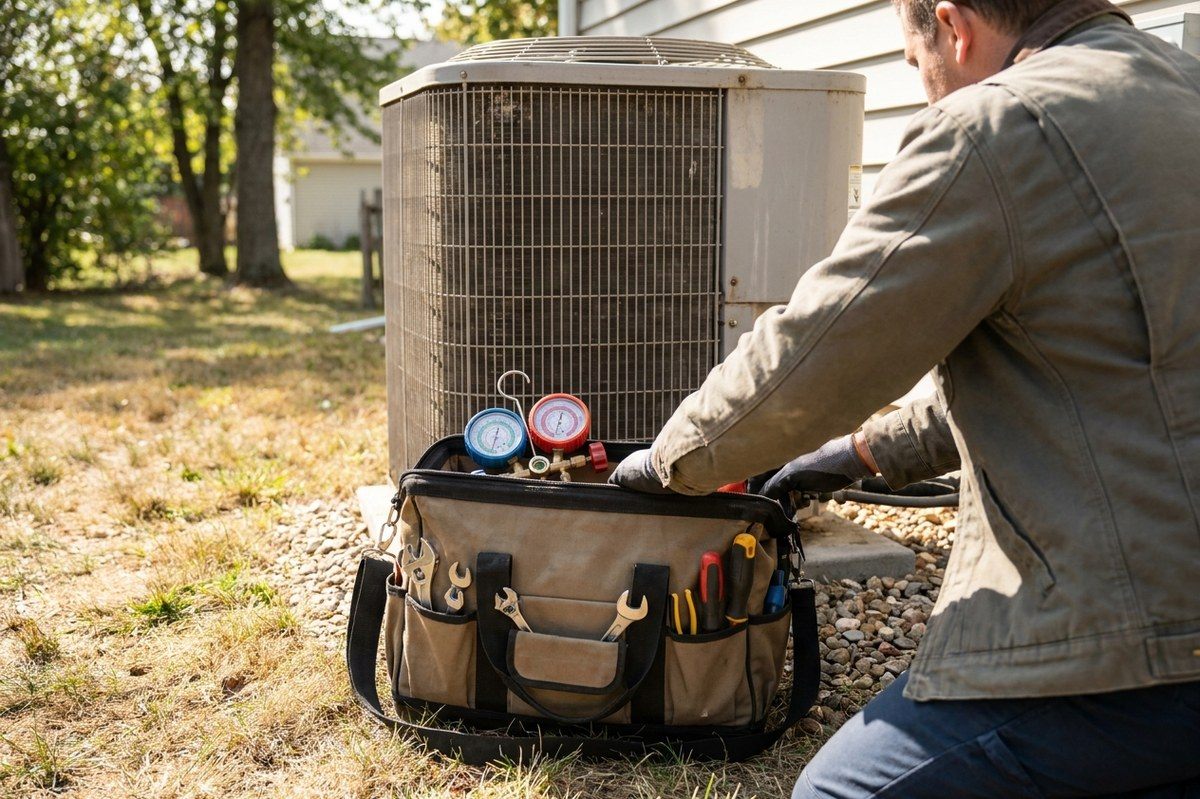
From the technicians at Pinellas Air & Heat
What Crowding Does to the Unit Over Time
The outdoor unit dumps heat from your house into the air. It pulls air in through the coil on the sides and throws it out the top. Block the sides and it re-breathes its own hot air, so head pressure climbs, the compressor runs longer and hotter, and the house never quite catches up. You feel it first as long run times and rooms that stay sticky. Over a few seasons that extra heat and pressure shortens compressor life and stresses the capacitor and contactor. Near the coast, salt air and lawn clippings pack the fins tight, which does the same thing from the inside out. Nothing dramatic happens on day one. It just gets worse.
The Clearance That Actually Matters
Give the unit about two feet of open air on every side and five feet of clear space above it. Nothing leaning on the cabinet, nothing stored on top, no lattice screen pressed against the fins. Plants are fine if they are trimmed back and not the kind that drop heavy seed fluff or berries. Keep mulch below the base rail so it does not wick into the coil. Move the trash bins, the pool noodles, the spare pavers and the bag of soil somewhere else. If a contractor built a deck or an enclosure over the unit, tell us at the next visit so we can check that the discharge air has somewhere to go.
The Habit: Ten Minutes, Once a Month
Walk out with a leaf rake and clear whatever has piled against the base and inside the corners. Pull the vines off. Cut anything growing within two feet back to two feet. In fall, do it after leaf drop; in spring, do it after the first few mowings, because grass clippings are the worst offender and they mat into the fins like felt. If you have a lawn service, ask them to blow clippings away from the unit rather than toward it. Once a year, at your maintenance visit, we clean the coil properly with the power off. That is our job, not yours. Yours is keeping the debris from getting there in the first place.
Warning Signs It Has Already Gone Too Far
Watch for the outdoor unit running for very long stretches without shutting off, air coming off the top that feels weak instead of forceful, and indoor air that cools but stays damp. A high-pitched or laboring sound from the compressor when it starts is worth a call. Ice on the refrigerant lines at the outdoor unit, or a puddle of water that was never there before, means stop and call for air conditioning repair. Same with a breaker that trips on hot afternoons and resets fine at night. That pattern usually means the system is fighting heat it cannot get rid of. Do not open the cabinet or touch the wiring. Turn the system off at the thermostat and reach out.
What We Do When We Come Out
We fix air conditioners and heating systems in homes across Florida and Georgia, and a crowded outdoor unit is one of the first things we look at. We check the coil condition, measure how hard the system is working, look at the capacitor and contactor for heat damage, and clean the coil with the power isolated. If a shrub or a fence has to move, we will tell you straight and show you why. If the crowding already cost you a component, we will explain the repair before we start. Call us for air conditioner repair, or for heating repair when the cool weather shows up and the same unit has to work in reverse.
Giving the Condenser Room to Breathe — straight answers
Can I cover the outdoor unit in winter?
We do not recommend a full cover. It traps moisture against the coil and gives rodents a nest. A top-only cover that keeps leaves out is fine, and heat pumps that run in winter should stay uncovered entirely.
Is it okay to plant shrubs around it to hide the unit?
Yes, if you keep two feet of clear air on every side and trim regularly. Avoid anything that sheds heavy fluff, needles or berries, and keep mulch below the base so it does not pack into the coil.
Can I hose off the outdoor coil myself?
A gentle rinse of the outside fins with a garden hose is common, but skip the pressure washer and never open the cabinet or touch wiring. Proper coil cleaning happens with the power isolated, which is part of our maintenance visit.
How it works
- Step 1
Tell us the symptom
Call or fill out the quote form and describe what changed. Warm air, short cycling, a clicking outdoor unit, water on the floor. Details help us load the right parts before we drive out.
- Step 2
We diagnose on site
A technician checks the thermostat, airflow, electrical side, refrigerant behavior, and the coil. Coils foul fast in coastal air, so we look there early. You get the finding in plain language before work starts.
- Step 3
Repair and verify
We make the repair, then run the system and watch it. Supply temperature, drain flow, amp draw, and how the house actually feels. If the fix needs a follow-up part, we tell you that day.
- A real person answers
- Open 7 days
- Written quote before work starts
Why homeowners call us
- Humidity gets equal weightCold air alone is not comfort. On slab homes and older condos, a system can hit temperature and still leave the rooms clammy. We look at run time, airflow, and drainage so the house dries out instead of just chilling.
- Coastal wear is expectedSalt air chews condenser fins and contactors. We check for corrosion, weak capacitors, and fouled coils as part of the diagnosis, because in this region those are causes rather than afterthoughts.
- Heat gets attention tooFurnace repair, heat pump reversing valve trouble, and heat strip failures all come through in the cooler months. Georgia homes lean on heat harder than Florida homes, and we service both ends of the region.
- No mystery invoicesYou hear what failed, what it takes to fix, and what we found nearby that may fail next. If a repair does not make sense on an old system, we say so instead of stacking parts on it.
- All major brands, gas & electricCarrier, Trane, Lennox, Goodman, Rheem, York and more, as an independent company.
- Straight answersIf a system is not worth repairing, we say so, often right on the phone.
About this guide
If the safe checks didn't fix it, the fault is real
Report what you saw during the checks and we handle the rest. A minute to book.
- A real person answers
- Open 7 days
- Written quotes
- All major brands
- Gas & electric
Rather not call? Get a free quote →