
Top-rated independent heating and cooling across Tampa Bay and Florida's Gulf Coast
Pre-Season Cooling Checks Worth Doing
You want to know your air conditioning will hold up before the first stretch of ninety-degree days, not after. We service cooling systems across Florida and Georgia, and the honest answer is that most July breakdowns were already showing signs in April. Here is what the season does to a system, what fails first, and the checks worth running now.
Call (888) 365-6280- A real person answers
- Open 7 days
- Written quote before work starts
Taking calls until 5:00 PM ET
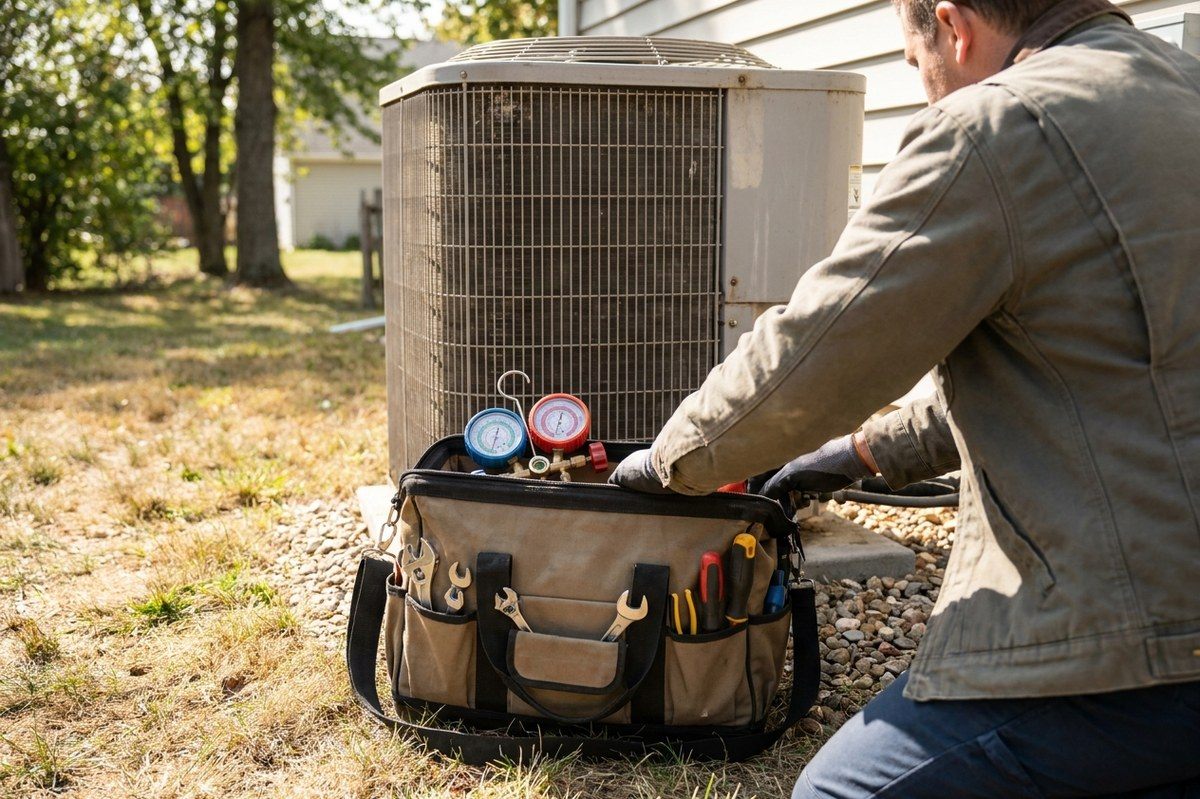
From the technicians at Pinellas Air & Heat
What The Season Actually Does To Your System
From spring on, your AC stops cycling and starts running. In coastal parts of our service area, salt air and constant humidity mean the outdoor coil fouls faster than most homeowners expect, and a dirty coil makes the compressor work against pressure it was never meant to hold. Indoors, the evaporator pulls gallons of moisture out of the air every day, so drain lines that trickled through winter suddenly carry real volume. Slab homes with ductwork in a hot attic add another load, because supply air picks up heat before it ever reaches a register. Nothing here is dramatic. It is just steady wear that shows up all at once.
Which Failures Spike, And When
Capacitors go first. They fail on the first genuinely hot afternoon, when the compressor draws hardest, and the symptom is an outdoor fan that hums but will not spin. Clogged condensate drains peak a few weeks later, once humidity is steady, and they show up as water at the air handler or a float switch shutting the system down. Refrigerant issues surface in midsummer because a small leak that coped in mild weather cannot keep up with full load. Contactors pit and stick. Older condensers in coastal areas lose fan motors to corrosion. If your system struggled last August, expect it to struggle sooner this year.
Pre Season Checks You Can Do Safely
Start with the thermostat. Fresh batteries, set to cool, fan on auto, and a setpoint at least a few degrees below room temperature so the system actually calls. Change the filter and note the size while you have it out. Walk outside and clear leaves, grass clippings, and any shrubs crowding the condenser, giving it a couple of feet of open space on all sides. Check that supply and return vents inside are open and not blocked by furniture or rugs. Look at your breaker panel for anything tripped. That is the full safe list. Refrigerant, wiring, and gas connections are ours to handle.
The Test Run Worth Doing Now
Pick a mild day and run the system for a solid hour, then judge it honestly. Air from the registers should feel clearly cold, not just moving. The house should feel drier, since dehumidification is half the job in our climate. Listen at the outdoor unit for grinding, buzzing, or a fan that hesitates before starting. Check around the air handler for damp insulation or standing water. If the system takes longer than it used to, short cycles, or trips a breaker, call us for air conditioner repair while the schedule is open. A test run in April is cheaper than a discovery in July.
When To Call Us Instead Of Waiting
Call for air conditioning repair if the unit runs but the house stays warm, if you see ice on the refrigerant line, if the outdoor fan will not start, or if water is collecting near the air handler. Those are not wait and see items. We also handle heating repair, so if your heater ran rough last winter, spring is the sensible time to sort it. If you ever smell gas or suspect carbon monoxide, get everyone out of the building first, call 911 or your gas utility from outside, and then call us. Same day scheduling depends on the day, and pre season calls are easier to fit.
Pre-Season Cooling Checks Worth Doing — straight answers
How early should I test my AC before summer?
Run a full test at least a month before you expect real heat. That gives you room to schedule AC repair without competing with everyone else who waited for the first hot week to find a problem.
Why does my AC cool but leave the house clammy?
Humidity control depends on runtime. A system that is oversized or cycling too fast cools the air without pulling enough moisture out. Dirty coils and low airflow cause it too. Have it looked at.
Is a spring tune up worth it if nothing seems wrong?
Usually yes. Most summer failures start as a weak capacitor, a fouling coil, or a partly blocked drain. Those are cheap to catch in spring and disruptive to catch in August.
How it works
- Step 1
Tell us the symptom
Call or fill out the quote form and describe what changed. Warm air, short cycling, a clicking outdoor unit, water on the floor. Details help us load the right parts before we drive out.
- Step 2
We diagnose on site
A technician checks the thermostat, airflow, electrical side, refrigerant behavior, and the coil. Coils foul fast in coastal air, so we look there early. You get the finding in plain language before work starts.
- Step 3
Repair and verify
We make the repair, then run the system and watch it. Supply temperature, drain flow, amp draw, and how the house actually feels. If the fix needs a follow-up part, we tell you that day.
- A real person answers
- Open 7 days
- Written quote before work starts
Why homeowners call us
- Humidity gets equal weightCold air alone is not comfort. On slab homes and older condos, a system can hit temperature and still leave the rooms clammy. We look at run time, airflow, and drainage so the house dries out instead of just chilling.
- Coastal wear is expectedSalt air chews condenser fins and contactors. We check for corrosion, weak capacitors, and fouled coils as part of the diagnosis, because in this region those are causes rather than afterthoughts.
- Heat gets attention tooFurnace repair, heat pump reversing valve trouble, and heat strip failures all come through in the cooler months. Georgia homes lean on heat harder than Florida homes, and we service both ends of the region.
- No mystery invoicesYou hear what failed, what it takes to fix, and what we found nearby that may fail next. If a repair does not make sense on an old system, we say so instead of stacking parts on it.
- All major brands, gas & electricCarrier, Trane, Lennox, Goodman, Rheem, York and more, as an independent company.
- Straight answersIf a system is not worth repairing, we say so, often right on the phone.
About this guide
When the easy checks change nothing, it's time for a tech
Mention which checks you ran when you book; it speeds up the visit.
- A real person answers
- Open 7 days
- Written quotes
- All major brands
- Gas & electric
Rather not call? Get a free quote →