
Top-rated independent heating and cooling across Tampa Bay and Florida's Gulf Coast
Closing Vents to Save Money
You have a spare bedroom nobody sleeps in, or an office you use twice a month, and closing those vents feels like free money. We hear it every week. The short answer: leave them open. Your air conditioning system was sized for the whole house, and shutting registers works against it. Here is what actually happens inside the ducts and the equipment when you do.
Call (888) 365-6280- A real person answers
- Open 7 days
- Written quote before work starts
Taking calls until 5:00 PM ET
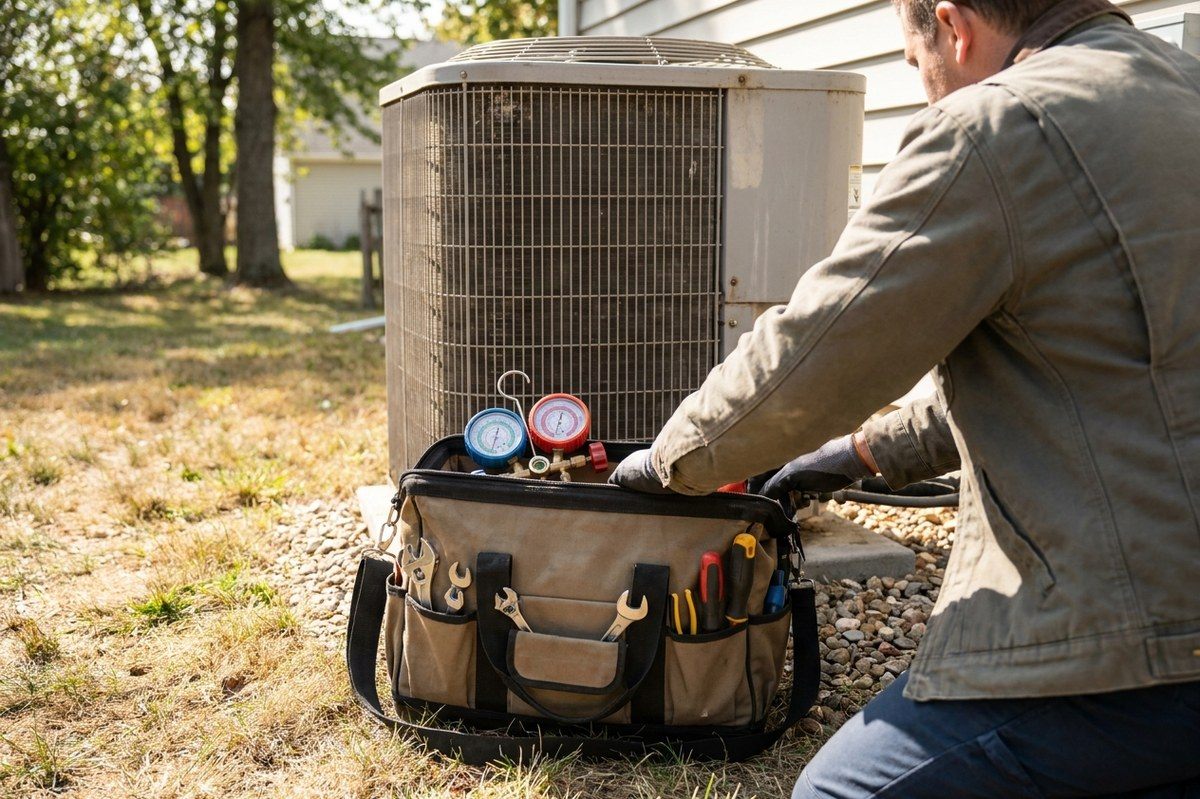
From the technicians at Pinellas Air & Heat
What Closing Vents Actually Does To The System
Your blower moves a set amount of air no matter how many registers are open. Close two or three and that air has to squeeze through what is left, so static pressure climbs. High static pressure means less airflow across the indoor coil, and a starved coil runs colder than it should. In humid climates across Florida and Georgia that coil can start icing, and once it ices the system stops cooling entirely. Meanwhile the blower motor works harder and hotter. None of this shows up on day one. It shows up as a compressor or motor that quits years earlier than it should have.
The Duct Leakage Nobody Sees
Most homes across the region have ductwork running through a hot attic or a tight crawlspace. Those ducts leak, usually at the seams and boots, and they leak more when pressure inside them goes up. So when you close registers, you push more of your cooled air out through those gaps and into the attic instead of into your rooms. You paid to cool that air. Now it is warming up insulation. Closed vents also let unconditioned rooms drift, and in a humid climate a closed off room with no airflow can hold moisture long enough to grow mold on the closet wall.
The Simple Habit: Walk The House Twice A Year
Twice a year, spring and fall, walk every room and confirm the supply registers are open and nothing is sitting on top of them. That is the whole habit. Furniture pushed against a wall register, a rug over a floor vent, a box in the spare room closet, those are the common ones. While you are walking, look at the return grille and make sure it is not furred over with dust. Change your filter on whatever schedule your home needs, and near the coast that is often sooner than the box says because salt air and dust foul things fast.
When Closing A Vent Is Reasonable
There is a narrow version of this that works. Partially closing one register in a room that runs colder than the rest, by a quarter or a third, is normal balancing and the system will handle it. What causes trouble is closing multiple registers all the way, or shutting off a whole floor. A rough rule we use: keep at least eighty percent of your supply registers fully open. If a room is genuinely unusable because it is too hot or too cold, that is a design or duct problem and we can look at it. Damper adjustments at the trunk are a better fix than register shutters.
Warning Signs The Damage Is Already Started
Call us if you see any of these. Ice or frost on the refrigerant lines or the indoor coil. Water in the drain pan or a ceiling stain under the air handler. A whistling or roaring sound at the registers that got louder over the last season. Rooms that never reach the thermostat setting even with the vent wide open. Air that feels cold but the house still feels clammy, which usually means airflow is off and the system is not pulling moisture out. Any of these means the system is fighting something, and air conditioning repair now is cheaper than a replacement later.
Closing Vents to Save Money — straight answers
Will closing vents lower my power bill?
No. The blower still moves the same air and the compressor still runs the same cycles. You get higher duct leakage and more strain on the motor, which usually costs you more over the life of the equipment.
What about the vents in my garage or attic?
Unconditioned spaces like an unfinished garage often have no supply register at all, and that is correct. If yours does, leave it as the installer set it and ask us to look during a visit rather than guessing.
Should I close vents in winter for heating?
Same answer. Heating repair calls in Florida and Georgia often trace back to restricted airflow, which lets a heat exchanger or strip heater run hotter than designed. Keep registers open and let the system breathe.
How it works
- Step 1
Tell us the symptom
Call or fill out the quote form and describe what changed. Warm air, short cycling, a clicking outdoor unit, water on the floor. Details help us load the right parts before we drive out.
- Step 2
We diagnose on site
A technician checks the thermostat, airflow, electrical side, refrigerant behavior, and the coil. Coils foul fast in coastal air, so we look there early. You get the finding in plain language before work starts.
- Step 3
Repair and verify
We make the repair, then run the system and watch it. Supply temperature, drain flow, amp draw, and how the house actually feels. If the fix needs a follow-up part, we tell you that day.
- A real person answers
- Open 7 days
- Written quote before work starts
Why homeowners call us
- Humidity gets equal weightCold air alone is not comfort. On slab homes and older condos, a system can hit temperature and still leave the rooms clammy. We look at run time, airflow, and drainage so the house dries out instead of just chilling.
- Coastal wear is expectedSalt air chews condenser fins and contactors. We check for corrosion, weak capacitors, and fouled coils as part of the diagnosis, because in this region those are causes rather than afterthoughts.
- Heat gets attention tooFurnace repair, heat pump reversing valve trouble, and heat strip failures all come through in the cooler months. Georgia homes lean on heat harder than Florida homes, and we service both ends of the region.
- No mystery invoicesYou hear what failed, what it takes to fix, and what we found nearby that may fail next. If a repair does not make sense on an old system, we say so instead of stacking parts on it.
- All major brands, gas & electricCarrier, Trane, Lennox, Goodman, Rheem, York and more, as an independent company.
- Straight answersIf a system is not worth repairing, we say so, often right on the phone.
About this guide
When the easy checks change nothing, it's time for a tech
Describe what you found and we'll take it from there. Booking takes about a minute.
- A real person answers
- Open 7 days
- Written quotes
- All major brands
- Gas & electric
Rather not call? Get a free quote →